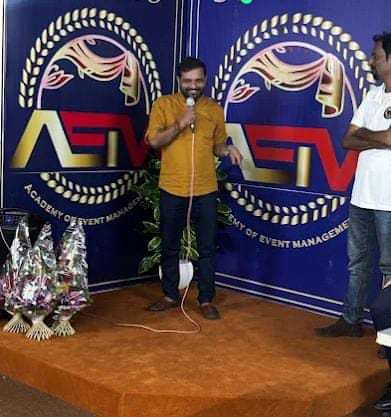
Academy of Event Management
About
OfficialAcademy of Event Management is a other institution in Indore, established in 2025. Academy of Event Management (AEM) was established in 2008 as a specialized institution dedicated to professional training and higher education in event management, hospitality, and experiential marketing. Located in the heart of Indore, one of India's fastest-growing commercial and industrial hubs, AEM has carved a niche in a sector that was traditionally neglected by mainstream Indian higher education. The academy operates from a compact but well-designed urban campus in the Scheme No. 94 area, easily accessible by all major modes of transportation within the city. The institution was founded with the vision of addressing the acute shortage of professionally trained event management professionals in India. When AEM opened its doors, the event management industry in India was still nascent, largely dominated by unorganized players and lacking formal educational infrastructure. Over the past 15+ years, AEM has evolved from a small training center to a recognized institution offering undergraduate and postgraduate programs accredited by various regulatory bodies. The academy has directly contributed to professionalizing India's event management, meetings and conventions, and experiential marketing sectors. AEM's academic portfolio is deliberately specialized and focused. Rather than attempting to be a general-purpose university, the institution concentrates on event management, hospitality management, and tourism-related disciplines. This focused approach allows deep subject matter expertise and industry alignment, though it also means limited program diversity compared to multi-disciplinary institutions. The curriculum is regularly updated in consultation with industry practitioners, event management associations, and international bodies like the International Association of Professional Hospitality & Service Management. Programs emphasize practical skills development through live event execution, case studies, and internships rather than purely theoretical learning. The institution's strength lies in its industry connections and practical orientation. AEM has established partnerships with major event management companies, hospitality groups, corporate clients, and tourism boards. Students are exposed to real events from early semesters, working with professional event teams on actual weddings, corporate conferences, product launches, exhibitions, and cultural festivals. This experiential learning model is a significant differentiator from traditional academic institutions. Faculty members maintain active industry consulting practices, ensuring curriculum relevance and bringing real-world case studies into classrooms. Research at AEM is emerging but limited in scope. The institution is not a research-intensive organization, nor does it position itself as such. Most faculty focus on applied research projects related to event management trends, consumer behavior in experiential marketing, sustainability in events, and tourism development. The research output is modest and primarily published in industry journals and conference proceedings rather than high-impact academic publications. For students seeking a research-heavy environment with publication opportunities, AEM may not be the ideal choice. Placement outcomes at AEM are respectable and directly reflect its specialized nature. The institution maintains strong relationships with event management companies, hotel chains, destination management organizations, corporate event departments, and tourism agencies. Companies like Wizcraft International, Medha Events, Triveni Event Management, ITC Hotels, Taj Hotels, and various luxury hospitality groups regularly recruit from AEM. However, placement numbers are modest compared to larger institutions—typically 75-85% of graduating batches secure placement within 3-6 months, with salary ranges reflecting the experiential marketing and hospitality industry rather than tech or consulting sectors. Campus life at AEM is intimate and industry-focused rather than traditionally collegiate. With only 850 students across all programs, the institution doesn't have the scale or the extra-curricular ecosystem of large universities. However, the trade-off is personalized attention, close faculty-student relationships, and a work-like professional atmosphere that mirrors the event management industry itself. The campus hosts frequent industry guest lectures, workshops on emerging trends (sustainable events, hybrid event management, digital marketing for events), and student-organized events like the annual convocation festival and industry networking sessions. Student organizations are limited but include event management clubs, hospitality management societies, and cultural groups. Hostel facilities are available but limited. AEM operates two hostels—one for women and one for men—with a combined capacity of approximately 200 beds. The hostels are decent but basic, reflecting the urban location and cost constraints rather than luxury amenities. Rooms are typically 2-3 bed configurations with attached bathrooms. Mess food is managed by external contractors and is generally acceptable but monotonous. Students from Indore or nearby areas often opt for home commuting or local PG accommodations, which are abundant and affordable in the area. Infrastructure is functional but not state-of-the-art. Classrooms are adequately equipped with AV facilities. The institution has a library with a focused collection on event management, hospitality, and tourism literature. Computer labs support learning in event management software, digital marketing tools, and design applications. WiFi coverage is available across campus but occasionally inconsistent during peak hours. The campus lacks a sports complex, swimming pool, or large auditorium—compromises made due to the urban location and real estate constraints. However, AEM regularly uses nearby venues in Indore for conducting large events and managing logistics, which serves as practical training. Admissions to AEM are merit-based but not highly selective. The institution accepts applications directly through its admissions portal without entrance examinations for undergraduate programs. Eligibility typically requires 12th standard pass with any stream (science, commerce, humanities). Postgraduate programs require a bachelor's degree in any discipline. The acceptance rate is relatively high (around 60-70%) as the institution aims to build a diverse cohort rather than maximize selectivity. Competition is primarily from other hospitality and event management colleges in central India, not from prestigious tier-1 institutions. Fee structures at AEM are moderate compared to private universities but higher than government institutions. Undergraduate programs cost approximately 180,000-220,000 INR per annum, while postgraduate programs range from 250,000-350,000 INR per annum. This positions AEM in the mid-to-upper segment of educational costs in Indore, affordable for upper-middle-class families but a significant investment for others. Who should apply: AEM is ideal for students genuinely passionate about event management, hospitality, or experiential marketing as a career, rather than those still exploring options. It suits candidates who prefer practical, industry-focused learning over purely academic environments, and who value personalized attention and real-world exposure. Students seeking large campus life with extensive clubs, sports, and diverse academic options should look elsewhere. AEM is not suitable for students aspiring to software engineering, medicine, law, or pure sciences—there are far better institutions for those paths. The institution is particularly well-suited for entrepreneurially-minded students interested in starting event management ventures, as the curriculum and industry exposure directly support this. What makes AEM unique: In a higher education landscape dominated by engineering, IT, and generalist universities, AEM fills a distinct niche as one of India's few dedicated, degree-granting institutions for event management. This specialization is both its strength (deep expertise, strong industry alignment) and limitation (narrow scope, smaller alumni network, fewer cross-disciplinary opportunities). The institution has successfully positioned itself as the pathway to professional event management careers in central India and has built a respectable reputation in the hospitality and tourism sectors. However, it operates in a narrower market segment than multi-disciplinary colleges and is less recognized nationally compared to top-tier management or hospitality institutes. Notable limitations: AEM's specialized focus means limited program diversity, smaller campus, fewer research opportunities, and a narrower alumni network compared to comprehensive universities. The institution is relatively young (founded 2008) and hasn't had time to build the institutional prestige of century-old colleges. Placements, while decent, are concentrated in mid-tier companies rather than dream companies of the consulting, finance, or tech sectors. For students seeking flexibility to explore multiple disciplines or change career paths post-admission, AEM's narrow curriculum could feel restrictive. The urban campus location, while convenient for city access, limits land for sports and recreational facilities. Faculty research is minimal, making it unsuitable for students interested in pursuing PhDs or academic careers. Finally, the event management industry itself is contract-heavy, project-based, and sometimes demanding in terms of work-life balance, which may not suit all candidates despite the romance of the profession.